Are you struggling to tell AI and AR glasses apart? This confusion makes choosing the right tech for your brand a risky bet. Let's clear this up for you.
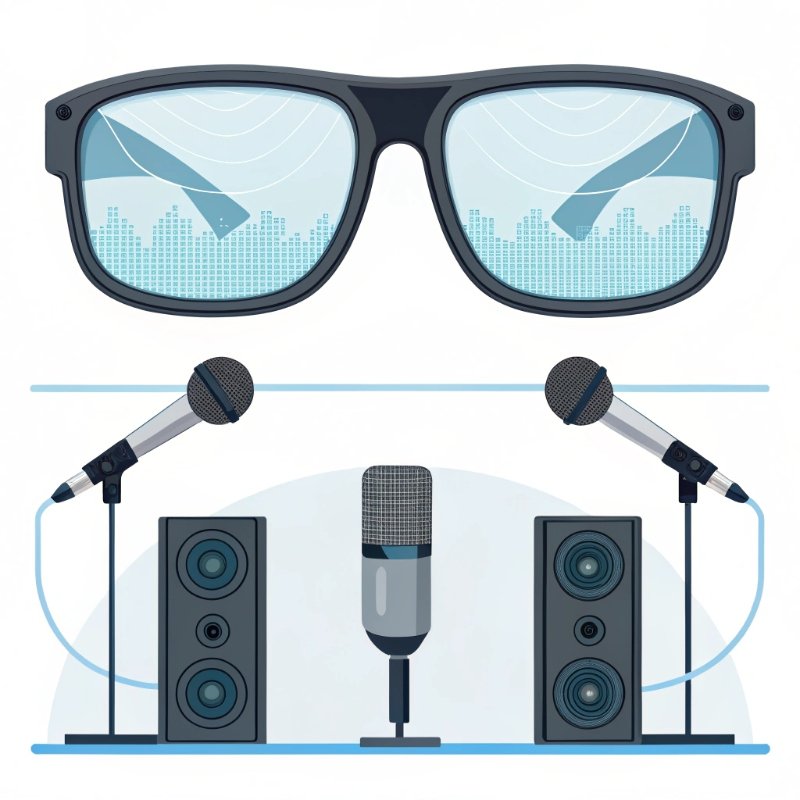
To put it simply, AI glasses1 are your audio-based intelligent assistant, handling tasks through voice commands2 and processing information for you. In contrast, AR glasses3 focus on your vision, overlaying digital images and data onto your real-world view for an immersive, interactive experience.
Understanding this basic difference is a great start. But as a procurement manager, you know the details are what matter for a successful product launch. To make a smart investment, you need to go deeper into the specific types, their best-fit applications, and the core features that ensure a product will last. Let's break it down further so you can choose the perfect technology for your market.
WHAT TYPES OF SMART GLASSES ARE OUT THERE?
Does the broad term "smart glasses" make it hard to define your product strategy? This ambiguity can lead you down the wrong path. We need to categorize them clearly.
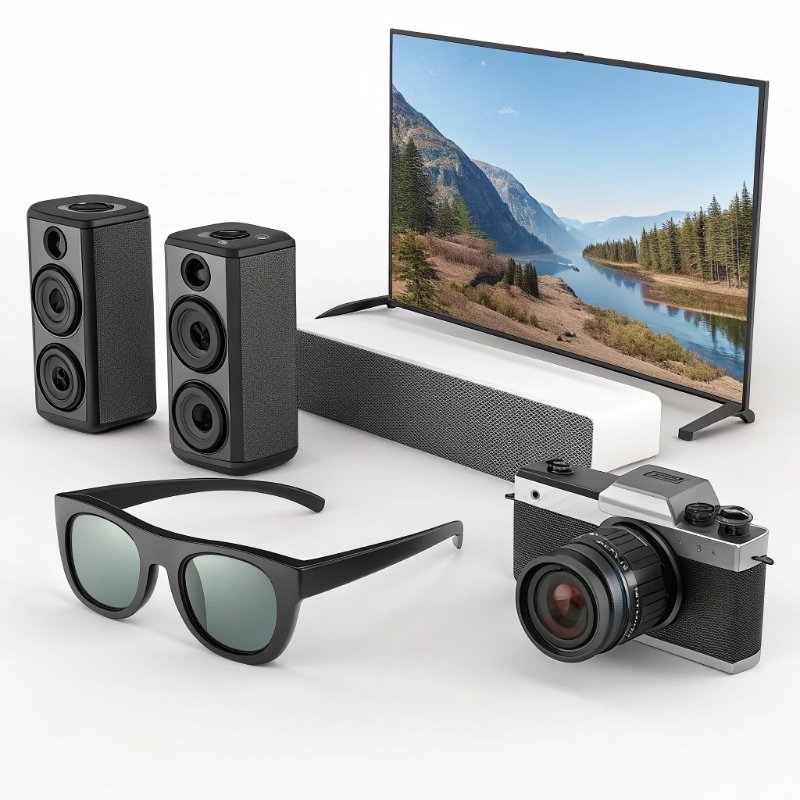
Essentially, smart glasses fall into a few key types. You have Audio Glasses for sound, Camera Glasses for recording, and Display Glasses for visual overlays (like AR). Aiglassly's AI glasses cleverly blend these, focusing on intelligent assistance4 without a distracting screen.
Let's dive deeper into these categories. For over five years, I've helped brands navigate this landscape, and I've found it's easiest to think about them based on their primary function.
The Main Categories
- Audio Glasses: These are the most accessible. Their main job is to play audio—music, podcasts, or calls—through open-ear speakers, so the user can still hear their surroundings. It's a safer alternative to earbuds, especially for active users.
- Camera Glasses: Their purpose is simple: to capture photos and videos from a first-person perspective, completely hands-free. At Aiglassly, we focus on features like anti-shake stabilization5 to ensure the footage is actually usable.
- AI Glasses: This is the exciting new frontier. These glasses act as your proactive assistant. They use AI to process voice commands, provide real-time information, and integrate with other apps. They are less about a visual display and more about intelligent, audio-based interaction.
- AR Glasses (Augmented Reality): These are the most complex. They use see-through displays to project digital information onto the real world. This could be anything from navigation arrows on the street to assembly instructions floating over a machine.
Here is a simple table to help you compare:
| Glass Type | Primary Function | User Interface | Ideal Market |
|---|---|---|---|
| Audio Glasses | Open-ear sound | Phone app, touch controls | General consumer, commuters |
| Camera Glasses | Hands-free photo/video | Buttons, touch controls | Social media users, travelers |
| AI Glasses | Intelligent assistance | Voice commands, touch | Active lifestyle, tech enthusiasts |
| AR Glasses | Visual digital overlay | Voice, gestures, controllers | Enterprise, industrial, gaming |
REALITY CHECK: WHICH GLASSES ARE SUITABLE FOR WHICH USE?
Now that you know the types, how do you match them to what customers actually want? A mismatch here leads to poor sales and hurts your brand. Let's align features to real-world use.
For everyday activities and sports, AI-powered camera and audio glasses offer the perfect hands-free convenience. For highly specialized industrial or medical jobs, the rich visual data and interactive overlays of true AR glasses are non-negotiable. It's about giving the user the right tool.
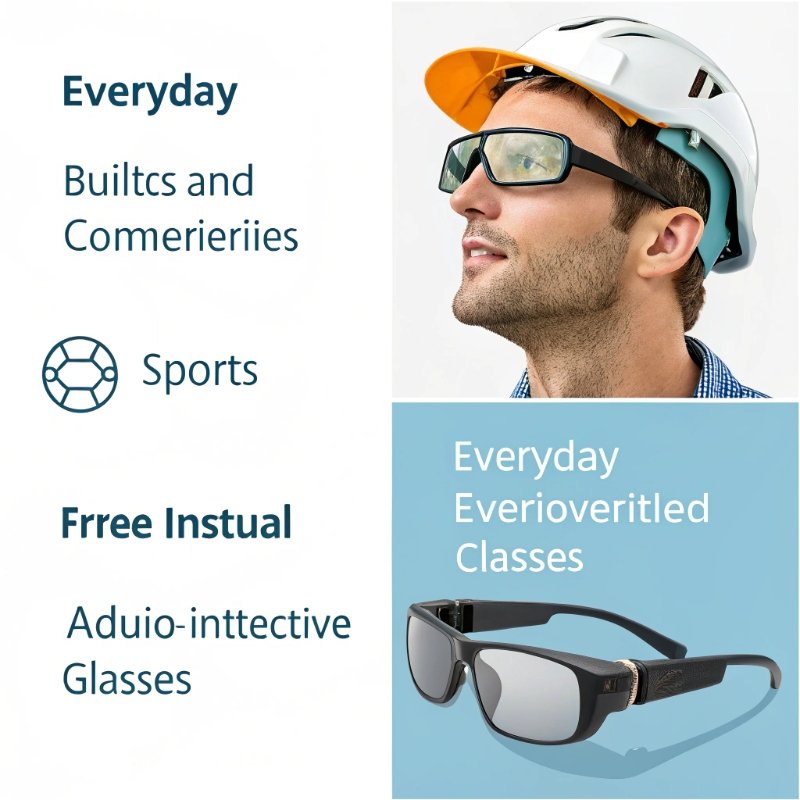
Over my years at Aiglassly, the most successful products I've seen are the ones that are perfectly tailored to a specific user. I worked with a client in the outdoor sports retail sector who was convinced they needed full AR glasses for cyclists. After discussing their customers' actual needs, we realized what they truly valued was capturing their ride, listening to music safely, and taking calls without stopping. We developed a custom AI-assisted camera glass for them. It was durable, lightweight, had a long battery life, and was simple to use. It became their bestseller because it solved a real problem, instead of creating a complex one.
Here’s a breakdown of which glasses fit best where:
Consumer & Lifestyle Applications
For this market, convenience and style are key. Users are doing things like hiking, cycling, fishing, or just walking around the city.
- Recommended Type: AI Glasses or Camera/Audio Glasses.
- Why: These users don't need complex digital overlays. They need their hands free. They want to capture a moment, listen to a podcast without blocking out traffic noise, or ask for directions without pulling out their phone. The focus is on enhancing their real-world activity, not replacing it. Our products, with their anti-shake cameras and open-ear audio6, are built for this.
| Application Area | Recommended Glass Type | Must-Have Features |
|---|---|---|
| Cycling/Running | AI-Assisted Audio/Camera Glass | Open-ear audio, UV protection, durable frame, long battery |
| Hiking/Fishing | Camera Glass | Hands-free recording, anti-shake, polarized lenses |
| Travel/Tourism | AI Glass | Voice-based translation, navigation, hands-free photos |
| Driving | Audio Glass | Hands-free calls, turn-by-turn audio navigation |
Professional & Enterprise Applications
In a professional setting, the glasses are a tool for a specific job. Efficiency and data are everything.
- Recommended Type: AR Glasses.
- Why: A warehouse worker needs to see pick-lists overlaid on aisles. A surgeon might need to see a patient’s vitals without looking away. A field technician needs to see assembly diagrams overlaid on a broken machine. Here, the visual, spatial computing power of AR is essential for improving accuracy and efficiency.
WHAT DO SMART GLASSES REALLY NEED IN DYNAMIC FIELDS OF APPLICATIONS?
With technology moving so fast, how do you make sure the product you design now is still relevant tomorrow? Investing millions in a product with a short shelf-life is a risk you can't afford.
For dynamic uses like sports or field work, glasses must be durable, lightweight, and have a battery that lasts. Beyond the hardware, seamless connectivity7 and a simple interface, like voice or touch, are what make the glasses practical and valuable in the real world.
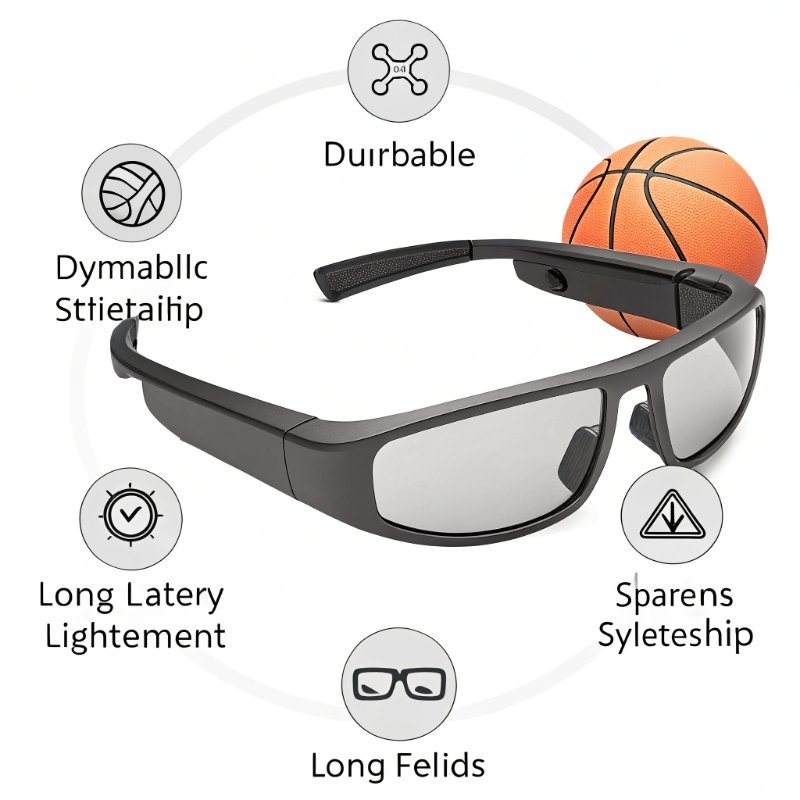
From my experience in manufacturing, I can tell you that chasing the flashiest new feature is a trap. The brands that succeed are the ones who master the fundamentals. For any smart glasses meant to be worn during an activity, there are non-negotiable requirements. This is where our focus at Aiglassly lies, and it's what you should demand from any manufacturing partner.
Core Hardware Requirements
- Durability and Comfort: When someone is cycling or hiking, their glasses can't be fragile or heavy. We use materials like floating TR90 frames, which are incredibly light, flexible, and resistant to impact. Features like adjustable nose pads ensure they stay comfortable for hours.
- All-Day Battery Life: A device that dies mid-day is useless. This is a common failure point for many smart glasses. We solve this by using Bluetooth 5.3 low-power chips and high-capacity batteries. This gives our glasses over 12 hours of continuous use and a standby time of up to 15 days.
- High-Quality Optics and Camera: The lenses and camera must perform. We integrate high-resolution, anti-shake cameras for clear, stable video. The lenses themselves are large for a wide field of view and offer crucial UV protection, a must-have for any outdoor use.
Essential Software and Connectivity
- Seamless Integration: The glasses must work flawlessly with the devices people already use. Our solutions are compatible with Android 9.0+ and iOS 10.0+, ensuring a huge potential market. We use stable WiFi and Bluetooth for reliable data transfer.
- Intuitive Control: In a dynamic situation, you can't be fumbling with tiny buttons. That's why we build in simple, responsive touch sensor controls and highly accurate voice command processing. This is how AI really shines, by making the technology feel effortless. The ultimate goal is a seamless connection between the person and the digital information they need.
Conclusion
Ultimately, the choice between AI and AR glasses is defined by your customer's needs. But the future points towards a fusion, blending AI's intelligent assistance with AR's visual context.
Explore how AI glasses function as intelligent assistants, enhancing daily tasks through voice commands. ↩
Find out how voice commands improve the usability and interaction of smart glasses. ↩
Learn about AR glasses and how they overlay digital information onto the real world for immersive experiences. ↩
Explore how intelligent assistance in smart glasses can enhance user experience and productivity. ↩
Discover the technology behind anti-shake stabilization that ensures clear and usable footage. ↩
Learn about the safety and convenience of open-ear audio technology in smart glasses. ↩
Discover how seamless connectivity enhances the functionality and user experience of smart glasses. ↩